Is Calculating Math? Part 1

I was reading a book one of my students lent me The Geeks' Guide to World Domination (excellent read, I love my students). There are 314 (yes, pi reference) short essays about all sorts of interesting topics about geek culture. One topic which interested me greatly was regarding Artificial Intelligence and what John Searle referred to as the Chinese Room Thought Experiment.


Quoting from Wikipedia (image also from Wikipedia):
Searle imagines himself in a room acting as a computer by manually executing a program that convincingly simulates the behavior of a native Chinese speaker. People outside the room slide Chinese characters under the door and Searle is able to create sensible replies, in Chinese, by following the instructions of the program; that is, by moving papers back and forth under the door.


When I read this, it immediately brought to mind many of our "A" students in our math/physics classes. A lot of students become extremely good at learning how to do a specific task (e.g. factor a quadratic equation or find the third side of a right triangle), yet you ask them to apply or use that information in a new situation and they are stuck. 


This is why the Chinese Room experiment spoke to me, as I wondered how many students leave our classes, giving the appearance of knowing how to do a calculation but one summer break later and they are tabula rasa.


There are two complaints I hear about math class from adults and students alike:
  1. It's not fun
  2. When will we ever have to use this?
Now we could draw the conclusion that they just don't get it, they are lazy, maybe they had poor quality teachers, etc, etc. But I would like to propose another theory, maybe they are right. Maybe math class isn't enjoyable or relevant.

Now before you start to email me about your class, remember that I am talking about the large number of people I have talked to over the years who just can't understand why I enjoy math so much, let alone teaching it. 


If I can be so bold, I think I fell in love with math in spite of my math classes. Don't get me wrong, I had some incredibly interesting math teachers but most of the lessons just involved various ways of moving x's and y's around. Who could honestly enjoy that?

If we look at the curriculum set forth in textbooks and standards, they all involve calculations and remembering which formula to use. Patterns, creativity and problem solving are never addressed. Yet these are the fun and relevant parts our students crave.

But, we have state and federal standards and textbooks filled with lessons that we can barely get through you say. The content in our classrooms is increasing exponentially and teachers are struggling to keep up. With a general pacing of one maybe two days per topic rarely provides any time to devote to depth or application. 

If you have not read Paul Lockhart's thought provoking treatise on the subject of math and creativity I highly recommend it. You can read it for free here and if you would like, you can purchase a paper copy: A Mathematician's Lament: How School Cheats Us Out of Our Most Fascinating and Imaginative Art Form.


For me and I am sure many of you, the difficulty lies in releasing ourselves from the cycle. Most of us went to a US Public School where our math classrooms were filled with endless rote calculations and 30 or more problems a night. If we examine this practice, the primary goal of this routine is for students to perform the task so many times that they can perform it in their sleep.


The Navy traines it's sailors the same way. Drilling for battle stations and damage control over and over again until we could do it in our sleep. The question is whether or not we want math to be something that is robotic and automatic or requiring imagination and creativity. From the mathematicians I have read and heard from (e.g. Letters to a Young Mathematician), calculation should certainly not be our primary goal. The great mathematical discoveries have begun with wonder and inquiry and only later would calculation be needed to test the theory.


How can we set ourselves and our students free from the antiquated and aggravating structure of American Math Class. Why do we teach what we teach? What is truly important in a math class? For me, it is students being able to leave thinking math is enjoyable. My hope is to inspire and create opportunities for this to happen. When all else fails, geeking out and sharing historical background (which for a lot of math is right out of a mystery thriller), a puzzle, real life application, or an extremely esoteric problem that only those inducted into the deepest of the mathematical mysteries usually get to experience. 


As for the calculation, that comes with time and help but unless we seek to inspire interest and awe in our students first they will not learn. They might remember it for a time but they will not learn.


For part 2, I would like to share more about what inspires me and what I think is a new direction for high school math and science.


Subscribe to BrokenAirplane!

Water Rockets - Fun Physics Project

Almost every year that I have taught Physics, I have used the Water Rocket activity. They are relatively cheap and easy to build and launch and it never fails to inspire awe. Here are the instructions I created from experience and various sources (link).

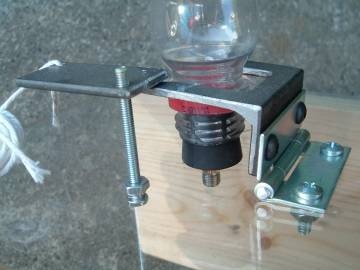
I have used various water rocket launchers and they each have their drawbacks. This time, I bought the launcher from this site. It worked perfectly and never had an issue in hundreds of launches.

There are multiple options, you can either buy the launcher, buy a kit at a discounted price, or build it yourself for free. His customer service was awesome and to be willing to give the plans away for free is much appreciated to teachers not afraid to DIY.

As long as the students play by the safety rules, they are free to be as creative as they like. It is a great introduction or review for trigonometric functions and solving linear equations. Also students loved seeing a little cloud being formed by the pressure release after launching. Lots of great questions asked before, during, and after launch. Just a fun project all around.


Subscribe to BrokenAirplane!

What I am Thankful For

With all of the talk about reform and our passion for change, I wanted to take a moment during this time to stop and reflect on who I am thankful for. These are people who inspire, teach, and keep me going.

First and foremost, my wife. She is my muse, and my best friend. She keeps me honest and helps me refine my thinking. The fact that we have always been able to support each other no matter what, is something that I can always treasure. That leads me to my son. He is the most amazing part of my life. He gives me hope, and inspires me everyday to be a better person. 

My parents for always challenging me to work hard and love what you do, even after they became the best in their field, they continue to innovate and learn. I am so proud and filled with joy for my brother's success this year. He has defied all odds and become a touring musician with fans screaming his name.

I am grateful for good friends who make me laugh and keep me thinking. To Jon, Michel, Patrick, Greg, Lisa, Eileen, I am never bored or unhappy when I am around you. To my colleagues and my incredible teaching partner Britt, the hard work and passion that all of you bring to the teaching profession fills our school with energy.

With all of the horror stories out there, I am so lucky to have deeply reflective and wise administrators who's vision and leadership make coming to work a pleasure.

To my robotics team, you inspire me and prove that you can learn anything with motivation + resources. I cannot wait to see what you come up with next. Go Chaos Vortex!

For everyone who has ever read, commented, or retweeted posts from my blog, I really appreciate it. Without the feedback, resources, and intelligent conversations we have had on Twitter and via email, it would have been much more difficult to keep posting while teaching, mentoring, and parenting.

I hope all of you had a wonderful Thanksgiving and enjoy your weekend. I am truly grateful for all of you! If you would like to give thanks to someone who makes your life better feel free to comment your thanks.

Subscribe to BrokenAirplane!

Search with Yolink and Find What You Are Looking For

The jobs of the future will require one not to know everything, but where to find everything. -Seymour Papert

When you use a search engine like Google, Yahoo, or Bing, the results determine whether or not the information can be found on the page. This does not mean that the page is relevant to you, nor does it help you find the information within the page.

Yolink is a service which allows you to search and quickly find the information you are looking for so you can avoid the frustration that comes with Internet research. Save time and find results that are more relevant to what you are looking for.

Using the example on their website, if your students were looking on the EPA website for information regarding Greenhouse Gasses, they would quickly become overwhelmed. Even the website's own search bar returns confusing and irrelevant results to what your students are looking for.

But by using Yolink you and your students can use your research time more effectively. Here's how:

After searching and finding this EPA page on Greenhouse Gases via Google, you can click on the Yolink browser extension or desktop application which you have installed.


From the Yolink menu, choose either to scan the links or text on page and type in "greenhouse gases". After clicking Find, the results show up ordered by relevancy. Students can click on the section that seems most relevant to them and be taken directly to that part of the page or site.

I have read articles and comments from teachers frustrated that students are not reading but skimming while researching. I would contend that this is a necessary skill with the current search engines. However, if your students are using Yolink, they can spend their time reading, understanding, and applying the information.

An added bonus is that all results state who holds the Copyright or if it is Creative Commons so your students can be sure to use and cite it appropriately.

Another bonus feature can be found by selecting the results you like and then clicking the "Google Docs" button. The results can be added to an existing or new Google Doc, saving even more time instead of cutting, pasting, and formatting back and forth.


The "share" button to the left of the Google Docs button allows for easy sharing via all the major social networking, blogging, and email services.

If you want to see Yolink in action, it is now integrated into the BrokenAirplane.com website. Search for popular topics like science, free software, python, humanities, and more! You will be able to find the result that works for you as well as preview it before clicking on the link. The time saved through all of the features will certainly speed up your browsing experience.

Ways to Get Started with Yolink:
  • Install the free browser extension or desktop application and use it directly.
  • If you are unable to install the software, then use Sweetsearch.com. This website is powered by Yolink and will give you a similar time saving experience as if you were using Yolink.
  • There are great video tutorials on Yolink, lessons to help your students research more efficiently and effectively.

Enjoy, and I hope this free service frees up your students to do more creative and analytical tasks so they can use the new information they have found.

Subscribe to BrokenAirplane!

How to Learn Anything - Lessons in Neuroscience from My Dad

In a previous post, I reflected on some life lessons I believe have made me what who I am today. The list is pretty popular and some have asked me to specifically elaborate on my Dad's advice to my Mom. You see, my Mom was told by everyone else that it was a waste of her time to seek to be something other than a secretary.

My Dad meanwhile had grown up in a small town in Missouri, far far away from the glitz and glamor of Hollywood. He was raised to follow his dreams no matter how difficult they might seem. One day he saw Cecil B. DeMille’s “The Greatest Show On Earth”. From that moment on, he knew he wanted to make movies. How could a Midwestern boy hope to learn all of the skills and talent to be a Cinematographer? I'll let him tell you:

When I (my Dad) was in junior high school I started reading photography books. They were all technically over my head. I was very depressed. I had been told that I didn't have the aptitude for math and science. I feared that if I couldn't learn the essentials of Cinematography I would never have a chance. One night I decided to force read the text, hoping that by glossing over the terms and concepts I didn't understand someday I would recollect the information when I had a deeper ability to interpret. Even though I glossed over the ideas I was able to connect the dots and put it all together. I used that tool for everything I didn't understand.

Later on he left Missouri for Los Angeles and began his journey towards becoming a Director of Photography. While working as a projectionist he met my Mom and while dating, she talked about her interest in science and nursing which had been inspired by Isaac Asimov books like Fantastic Voyage. Quoting my Dad again:

When your mother was having trouble I just told her what I did. She was very frustrated in the beginning. I insisted she read her textbooks before she even went to class. That way she would have a recollection of complex phrases and ideas when the teacher introduced them. For her she had already read the material which helped her to overcome her initial fear.

This same advice was passed onto me and my brother. Whenever I would get my textbooks before school started, I would always flip through them and skim the information. My brother and I would always go to the bookstore or library to learn something new. He has taught himself to read and compose music via this method, and I have learned almost all that I know simply by reading books and materials that I didn't at first understand.

I later discovered that Richard Feynman followed a similar method which he humorously retells in "Surely You're Joking"

When Feynman was a graduate student at Princeton, he was allowed to sit in a biology course if he agreed to do the assignments. One involved giving a report on research that had been done on cats. He was unfamiliar with the names of the muscles mentioned, so he went down to the library to get “a map of the cat.” Then he gave his report, beginning with an explanation of the cat’s anatomy. The biology students immediately stopped him, saying they already knew all that. “Oh,” he replied, “you do? Then no wonder I can catch up with you so fast after you’ve had four years of biology.” As he wrote, “They had spent all their time memorizing stuff like that, when it could be looked up in fifteen minutes.”

It is frustrating and confusing at first, but everything eventually clicks. The trick is to not stop until you find the answer. It is far easier to do that now with Google, Wikipedia, or YouTube and I love being able to take control of my learning and not have to pay or wait for others to teach me.

In case you think my family is unique somehow in being able to do this, it is simply not true. Motivation + Resources is all that is necessary.

Tech Support:
If you want to learn any new technology there are three pieces of advice I would give you.

1) Think like a computer (or at least a programmer): The way we use technology was developed a long time ago by a few individuals and organizations. I am talking about file folders, windows, mice, and all that we take for granted. It could have been developed many different ways but this is the system we have. Jaron Lanier does a great job of talking about this system in his book You Are Not a Gadget.

If you can train yourself to think like a computer programmer or a computer itself, then you can figure out anything. Can't find the command you want? Look around and ask yourself what possible places it could be. This takes practice but can be done and leads me to my next piece of advice.

2) Play with the technology: Explore it, try things out. If you are using working with software you can almost always hit the undo button. My Mom was always calling me for help over the phone, but one day her tech support calls stopped coming. I eventually called and asked her, are you having any technical issues? She said yes, but she had figured them out herself!

The turning point for her was, "realizing that I could experiment and try things without breaking the computer". Now her and I talk all the time about cool things she is discovering in technology. All because she decided to be adventurous.

Keep in mind you will make mistakes so save anything important.

3) GIYF: This acronym is not mine but I think of it when people send me a question, and then 10 seconds later I send them the exact answer back. They are amazed! How could I know the answer to so many questions? Quite simply...I don't. Google Is Your Friend is a Internet slogan stating, if you don't know the answer, see if someone online has already asked and received the answer.

Another famous Internet acronym is GIGO. Which stands for Garbage In Garbage Out. If you don't search correctly, you will not get the answer you want. It might be out there but called something else. I always liken this to how telephone books still use the term Apparel instead of Clothes. Here are Google's suggestions on how to effectively search, and if you get the hang of those try these powerful search tricks.


Have you tried these ideas or something similar to learn something new? Post a comment and share it with us. What do you do to solve your technology issues?

Subscribe to BrokenAirplane!

A Defense of Wikipedia - Crowdsoucring the World's Knowledge

Wikipedia is one of the largest Crowdsourced projects on the planet. With 3 million plus articles in English and millions more in other languages, it is the work of many people working tirelessly to share information and knowledge. It is also one of the most visible crowdsourced projects out there as it is usually the top result in your searches.

Wikipedia has received criticism since its inception almost ten year ago. With the idea that anyone could write and edit articles, the trustworthiness (truthiness as Stephen Colbert would say) was called into question. Many teachers will not accept research sourced from Wikipedia because of their concern that it would be incorrect. I hope this articles encourages the wider adoption of the Wiki and convinces people of its usefulness while still being realistic about its shortcomings.

In Defense of Collaborative Editing
The amount of articles that are added every year to Wikipedia are astounding. To have a small team of encyclopedia writers start from scratch would be an impossible task, yet hundreds of thousands of articles are added each year to Wikipedia. How is this possible?

According to the Internet World Stats page almost 2 billion people are online and while only a fraction of those are writing and editing for Wikipedia it divides the labor enough to make it possible for anyone to contribute.

Wikipedia has received criticism from media sources, comedians, teachers, and almost everyone else because there is the perception that anyone can just log in and within 10 seconds make themselves the President of the USA or make 2+2=5.

The best way to convince you otherwise is to encourage you to go online and propose a new article or edit an existing one.

Are you back? Are your hopes of being cited as the inventor of the light bulb or married to a supermodel dashed? If like me, you have submitted an article or changes for review, you will soon either have your change rejected or be told to modify it to meet the Wiki's high standards for submission. There are people in the community who contribute primarily by reviewing changes submitted for approval and they do an excellent job of catching errors.

Reliability of Wikipedia Articles
While there have been scandals and pranks, they are eventually corrected. In fact, when Wikipedia and the Encyclopedia Britannica were compared side by side, the number of errors found in each were similar. In fact there are some errors n the EB that have been corrected by Wikipedia.

Rest assured, if you are going to Wikipedia to learn or research a topic that is pretty much set in stone you have nothing to worry about. If you are trying to learn a skill or concept then you should be good to go. However, if you are looking at something related to Pop Culture you are much more likely to stumble upon a point of contention. If there are errors it may be because there is dispute about certain historical events but even the controversy is often discussed in the article.

Out of concern that Wikipedia's articles were not trustworthy for student consumption, alternative movements like CK-12 textbooks and Free High School Science Texts emerged. These are peer reviewed textbooks free for anyone to teach and/or learn from. Additionally, CK-12 has the unique feature of being able to customize your textbooks for your class so some topics are there while others are not.

Diversity always drives evolution and Wikipedia and the learning community as a whole can only benefit from alternative sources of learning. I hope more teachers will compare their trusted textbook or resource with Wikipedia to see how accurate and high quality of a resource it is.

Freedom of Information
No one group or person should control information. This was the premise behind a free press because  history shows that dictators and rulers alike have known that to control information is to control the culture and society. In the incredible work by Myles Horton and Paulo Freire We Make The Road by Walking, Freire remarks that in Brazil, the revolutionaries would come but the oppressive education and bias textbooks/lessons would remain.

We cannot let movements like Wikipedia die out. They are our defense against tyranny and as Thomas Jefferson remarked, "freedom of the press is not meant to protect the right to publish, it is to protect the right of the citizen to know."

Appropriately Using Wikipedia in the Classroom
I know I have referenced Sugata Mitra's Ted talk before, but the results are just too powerful to ignore. Students will learn if they are given the tools and time to do so. Rather than directly instruct the students all the time (or ever), why not teach them how to use the information on the web and how to discern what is useful and reliable. Many teachers use the Internet to research for lessons, why not shift that responsibility of learning to the students?

Wikipedia is a resource, an incredibly valuable resource with flaws. Yet, it is the perfect place for students to get their feet wet. When they leave the classroom walls in a few years (or even that evening) they are going to plug back into the Web to learn and they will most likely click on Wikipedia. Knowing how to navigate the web wisely is one of the best skills we can pass on to our students.

Closing Thoughts
  1.  Support the movement. The project is always in need of contributions both financial and of time.
    • Wikipedia is Free to everyone (i.e. Free as in Speech and as in Pizza) which embodies the World Wide Web's founding principles of connecting people and sharing data and information.
  2. Wikipedia is useful as a jumping off point. Sometimes the articles are confusing or too technical but the link references at the bottom or something mentioned in the body of the article often are extremely useful to guide one in the next steps for research.
  3. The controversy is important as people need to be critical of their media. I am extremely grateful to sites like Snopes, that encourage critical thinking and independently scour the web for errors and myths. Don't believe everything that you read or only read one source no matter where it is coming from.
Favorite experiences with Wikipedia? Disagree? Leave a comment!

Great new Math Blog: Infinigons.com and the 2010 BrokenAirplane Edublog Nominations

It is time for the 2010 Edublog Awards Nominations:

It has been a great experience for me to blog. I really appreciate the many unique opportunities I have enjoyed and people I have met through doing it. In my opinion it is really important to get many voices in the conversation about education. To get various perspectives and new ideas.

Over the last couple of years, I have had the privilege of working with Allison. She is a hard working and committed to giving her students the most interesting math experience they can have. Her and I have also worked to create curriculum that integrates computer science and math through the Python Programming Language. She has begun a math blog www.infinigons.com (Infinity + Polygons) which I hope you will check out.

www.infinigons.com

Here are my EduBlog award nominations:

  • Lifetime Achievement: Karl Fisch The Fischbowl - I was introduced to this blog over 3 years ago while I was working with the University of Utah on creating their Epigenetics Curriculum. Since then I have followed him on Twitter and his Math focused blog Transparent Algebra. Innovative and thoughtful posts.
  • Best Educational Wiki: Patrick Yurick 9th Grade Multimedia Wiki - It has been my pleasure to work and consider myself friends with him. A deeply thoughtful teacher, his ideas and pedagogy has influenced every educator at our school. The founder of the very popular and groundbreaking Graphic Novel Project and co-creator of the Interdisciplinary Spanish/Multimedia Talk Town Project. Start a conversation with this guy, you will not regret it.
  • Most Influential Blog Post: Anne Smith Alfie Kohn - I Need You. When the blog world saw how open she was about sharing her concerns and open to asking for help, it could not help but offer suggestions and support. Even Alfie Kohn found time to respond.
  • Best Group Blog: Graphic Novel Project. This group of students works extremely hard to produce professional quality comic books about compelling and important topics like Immigration and School Dropout. The work that they do will have far reaching effects as their influence in the community grows.